Source & Reference:
Published by Guangdong Center for Disease Control and Prevention (GDCDC)
1. Microplastics: Ubiquitous "Environmental Fission Agents"
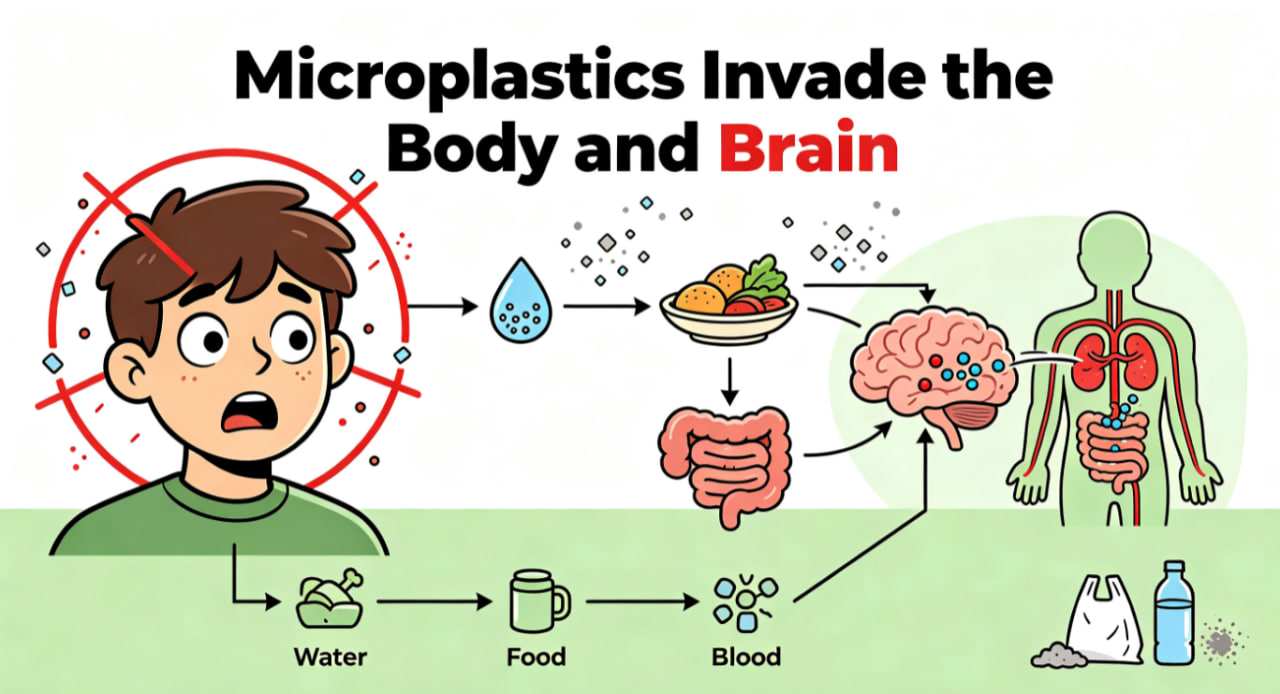
Microplastics do not occur naturally. Public health analyses classify their environmental contamination into three primary channels. Microplastics (<5mm particles) have spread across water,soil,indoor dust,and can accumulate inside human organs.
• Primary Microplastics (Direct Releases)
Industrial spills,care‑product microbeads,washing synthetic fabrics,tire‑wear road dust.
• Secondary Microplastics (Degraded Macro‑plastic)
UV‑light breaking bottles/nets; heating food inside plastic containers; high‑temperature waste incineration produce nanoplastic particles.
• Specialized Migration Pathways
Air‑borne textile fibers; food‑chain bio‑accumulation Plankton→Fish→Human; municipal wastewater cannot fully filter micro‑particles.
Source & Reference:
Published in The New England Journal of Medicine (NEJM)
2‑1 Carotid Arterial Plaque & Cardiovascular Events
257 patients receiving carotid endarterectomy surgery,plaque tissue tested by mass‑spectrometry & electron microscopy to detect plastic particles.
• Polyethylene detected in 58.4% patients; PVC found in 12.1% patients.
• Micro‑plastic positive group: 4.53‑fold hazard ratio for heart‑attack,stroke or all‑cause‑death within 34‑month follow‑up.
• Jagged plastic fragments activate IL‑6 / IL‑18 / TNF‑α inflammation,making arterial plaque prone to rupture.
Source & Reference:
Published via NIH / PMC Academic Repository
2‑2 Blood‑Brain Barrier Penetration & Dementia Correlation
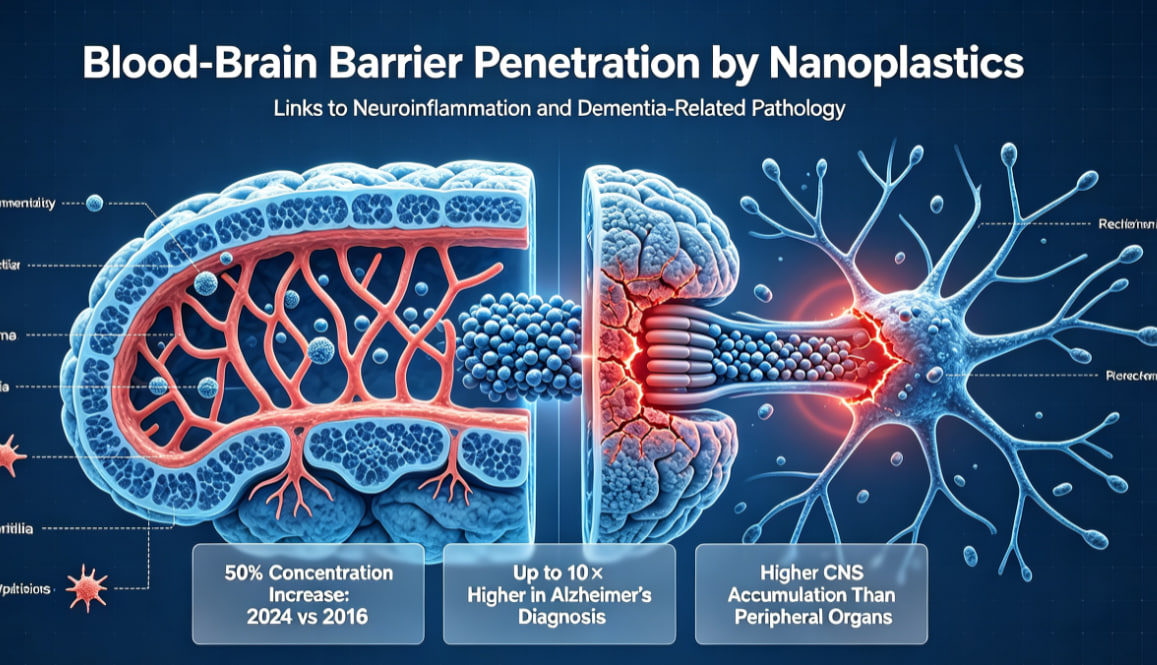
Human autopsy frontal‑cortex tissue research. Ultra‑fine nanoplastics can cross blood‑brain barrier and build‑up inside central‑nervous‑system.
• Brain samples from year‑2024 have 50% higher plastic concentration compared with 2016 autopsy samples.
• Alzheimer‑disease patient brain tissue carries up to 10‑times plastic density vs healthy‑control brains.
• Nanoplastics enter neuronal mitochondria and trigger local neuro‑inflammation response.
Source & Reference:
Published in Molecular Cancer Journal / Xinhua Science Report
2‑3 Micro‑particles in Colorectal Tumor Tissue
Xiangya Second‑Hospital research on human intestinal‑tumor biopsy samples,analyze micro‑plastic distribution and biological effects.
• Micro‑plastics detected within 56.4% tumor‑biopsy specimens; higher density in cancerous zones than surrounding healthy tissue.
• Over 76% particles <100μm,sharp irregular geometry mechanically damages mucosal‑cell membranes,causes chronic inflammation.
• Mechanical injury raises ROS level,boost EMT biological‑pathway and facilitates tumor‑cell invasion & metastasis.
Source & Reference:
Published in Environmental Science & Technology Letters / People's Daily Health
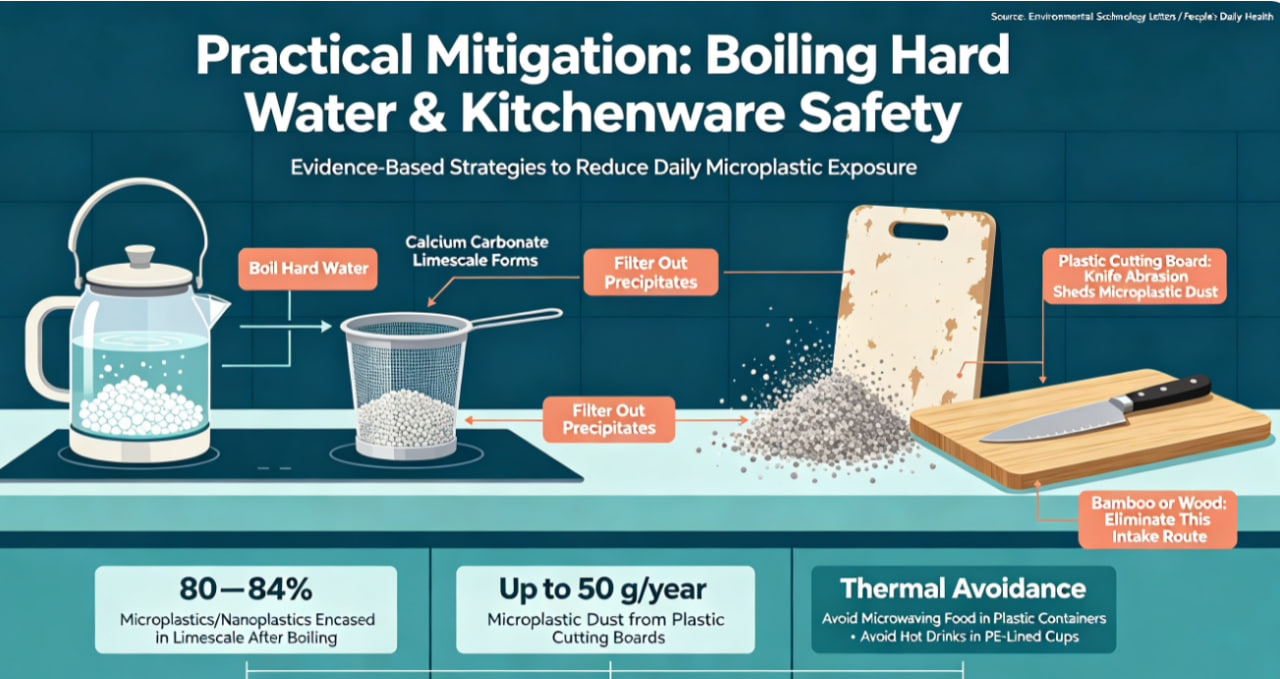
3 Practical Mitigation: Boiling Hard Water & Kitchenware Safety
Evidence‑based public‑health daily‑life advice,to effectively reduce human micro‑plastic ingestion exposure risk.
• Boil hard tap‑water: calcium‑carbonate limescale encapsulate 80‑84% micro/nano‑plastics. Filter precipitated scale out after boiling.
• Plastic cutting‑board abrasion can shed up to 50‑gram micro‑plastic dust per‑year. Replace with bamboo / hardwood chopping‑boards.
• Wear pure‑cotton garments; reduce synthetic‑fiber clothing, which releases large‑volume micro‑fibers during washing.
• Prefer glass, ceramic and stainless‑steel tableware; minimize disposable plastic tableware.
• Do not store acidic food inside plastic containers, acid accelerates plastic particle leaching.
• Avoid microwaving food inside plastic containers; refrain pouring hot‑beverages into polyethylene‑lined disposable paper‑cups.