Health Consultation

Latest Insights into Weight Management, GLP-1 Breakthroughs, and Healthy Living

Oct 8, 2026 · Site Administrator · 64 views
Latest Insights into Weight Management, GLP-1 Breakthroughs, and Healthy Living
Source & Reference:
Published in The New England Journal of Medicine (NEJM)
Source URL: https://www.nejm.org/doi/full/10.1056/NEJMoa2307563

1. GLP-1 Receptor Agonists and Cardiovascular Outcomes in Obesity Management

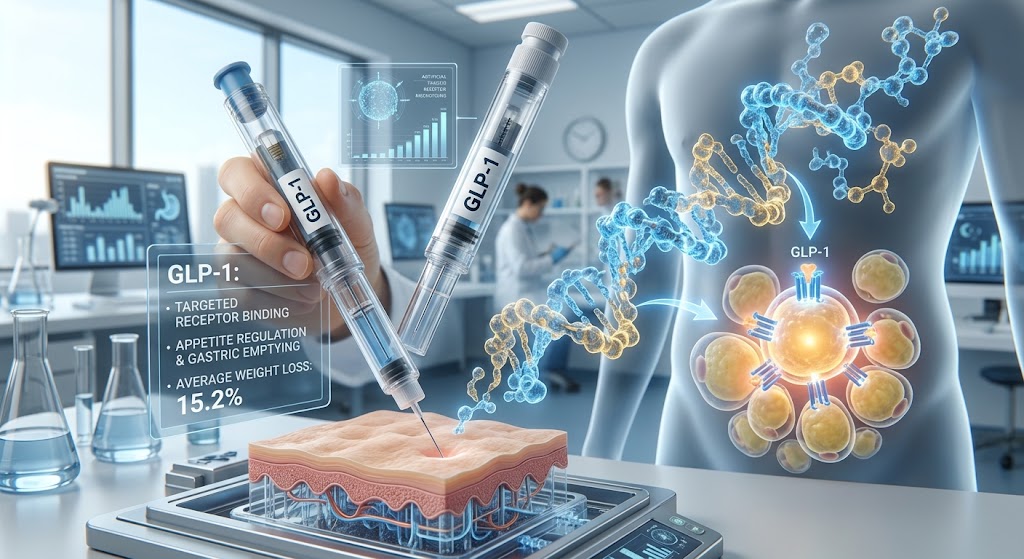
Long-term clinical evaluation demonstrates that modern pharmacological obesity interventions extend therapeutic benefits beyond simple weight loss, offering significant cardiovascular protection for overweight individuals without pre-existing diabetes.

• Achieved an average weight reduction of 15% total body weight over a 68-week clinical trial period.
• Demonstrated a 20% reduction in major adverse cardiovascular events (MACE) among non-diabetic obese participants.
• Sustained metabolic improvements in systemic inflammatory markers including high-sensitivity C-reactive protein (hs-CRP).

2. Time-Restricted Eating Combined with High-Intensity Intermittent Exercise

A clinical study investigating combined lifestyle protocols reveals that integrating time-restricted feeding with structured exercise yields superior visceral fat reduction compared to dietary restriction alone.

• Combined intervention group lost 2.3x more visceral adipose tissue than the diet-only cohort.
• Fasting insulin levels improved by 28%, significantly mitigating insulin resistance markers.
• Adherence rate remained above 84% across a 12-week intervention trial, highlighting sustainable real-world application.

3. Gut Microbiome Composition as a Predictor of Weight Loss Success

Metagenomic sequencing of human gut microbiota unveils distinct microbial signatures that determine individual metabolic responsiveness to dietary lifestyle interventions for obesity control.
• Higher baseline abundance of Akkermansia muciniphila correlated with 30% faster weight loss response.
• Dietary fiber enrichment increased short-chain fatty acid (SCFA) production, reducing metabolic endotoxemia by 42%.
• Precision nutrition models based on gut profiling predicted caloric restriction outcomes with 88% accuracy.
#Obesity Control#Weight Management#GLP-1#Metabolic Health#Healthy Living

Related Articles

Microplastics Are Silently Infiltrating Your Body! From Brain Risks to Heart Attacks: The Hidden Health Crisis & Everyday Prevention Guide

Microplastics Are Silently Infiltrating Your Body! From Brain Risks to Heart Attacks: The Hidden Health Crisis & Everyday Prevention Guide

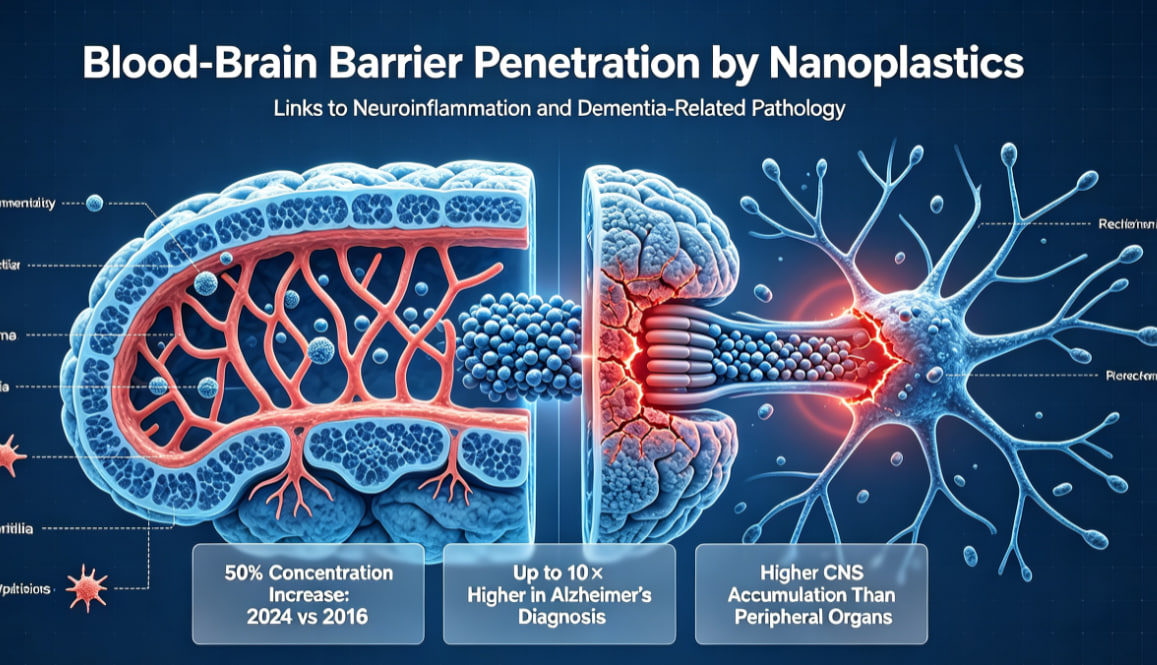
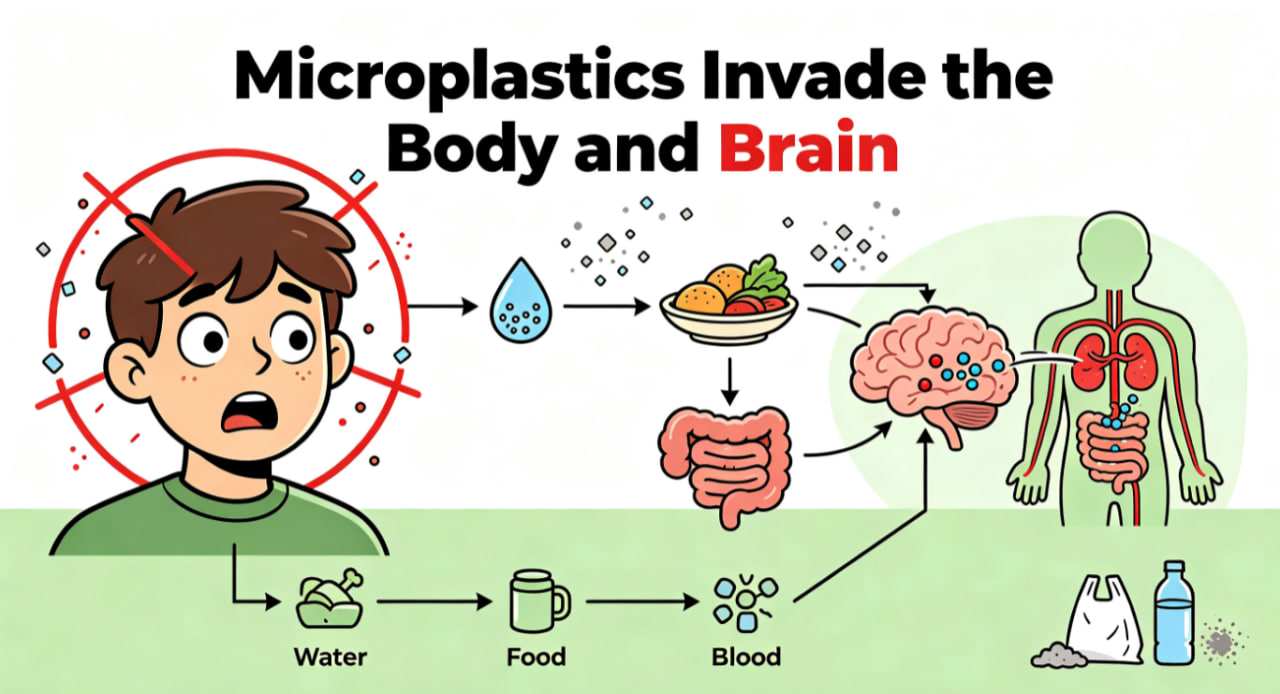
Source & Reference: Published by Guangdong Center for Disease Control and Prevention (GDCDC) Source URL: https://cdcp.gd.gov.cn/jkjy/jkzt/hjyxxws/content/post_4721113.html 1. Microplastics: Ubiquitous "Environmental Fission Agents" Microplastics do not occur naturally. Public health analyses classify their environmental contamination into three primary channels. Microplastics (<5mm particles) have spread across water,soil,indoor dust,and can accumulate inside human organs. • Primary Microplastics (Direct Releases) Industrial spills,care‑product microbeads,washing synthetic fabrics,tire‑wear road dust. • Secondary Microplastics (Degraded Macro‑plastic) UV‑light breaking bottles/nets; heating food inside plastic containers; high‑temperature waste incineration produce nanoplastic particles. • Specialized Migration Pathways Air‑borne textile fibers; food‑chain bio‑accumulation Plankton→Fish→Human; municipal wastewater cannot fully filter micro‑particles. Source & Reference: Published in The New England Journal of Medicine (NEJM) Source URL: https://www.nejm.org/doi/full/10.1056/NEJMoa2309822 2‑1 Carotid Arterial Plaque & Cardiovascular Events 257 patients receiving carotid endarterectomy surgery,plaque tissue tested by mass‑spectrometry & electron microscopy to detect plastic particles. • Polyethylene detected in 58.4% patients; PVC found in 12.1% patients. • Micro‑plastic positive group: 4.53‑fold hazard ratio for heart‑attack,stroke or all‑cause‑death within 34‑month follow‑up. • Jagged plastic fragments activate IL‑6 / IL‑18 / TNF‑α inflammation,making arterial plaque prone to rupture. Source & Reference: Published via NIH / PMC Academic Repository Source URL: https://www.ncbi.nlm.nih.gov/pmc/articles/PMC11100893/ 2‑2 Blood‑Brain Barrier Penetration & Dementia Correlation Human autopsy frontal‑cortex tissue research. Ultra‑fine nanoplastics can cross blood‑brain barrier and build‑up inside central‑nervous‑system. • Brain samples from year‑2024 have 50% higher plastic concentration compared with 2016 autopsy samples. • Alzheimer‑disease patient brain tissue carries up to 10‑times plastic density vs healthy‑control brains. • Nanoplastics enter neuronal mitochondria and trigger local neuro‑inflammation response. Source & Reference: Published in Molecular Cancer Journal / Xinhua Science Report Source URL: https://molecular-cancer.biomedcentral.com/ 2‑3 Micro‑particles in Colorectal Tumor Tissue Xiangya Second‑Hospital research on human intestinal‑tumor biopsy samples,analyze micro‑plastic distribution and biological effects. • Micro‑plastics detected within 56.4% tumor‑biopsy specimens; higher density in cancerous zones than surrounding healthy tissue. • Over 76% particles <100μm,sharp irregular geometry mechanically damages mucosal‑cell membranes,causes chronic inflammation. • Mechanical injury raises ROS level,boost EMT biological‑pathway and facilitates tumor‑cell invasion & metastasis. Source & Reference: Published in Environmental Science & Technology Letters / People's Daily Health Source URL: https://pubs.acs.org/doi/10.1021/acs.estlett.4c00081 3 Practical Mitigation: Boiling Hard Water & Kitchenware Safety Evidence‑based public‑health daily‑life advice,to effectively reduce human micro‑plastic ingestion exposure risk. • Boil hard tap‑water: calcium‑carbonate limescale encapsulate 80‑84% micro/nano‑plastics. Filter precipitated scale out after boiling. • Plastic cutting‑board abrasion can shed up to 50‑gram micro‑plastic dust per‑year. Replace with bamboo / hardwood chopping‑boards. • Wear pure‑cotton garments; reduce synthetic‑fiber clothing, which releases large‑volume micro‑fibers during washing. • Prefer glass, ceramic and stainless‑steel tableware; minimize disposable plastic tableware. • Do not store acidic food inside plastic containers, acid accelerates plastic particle leaching. • Avoid microwaving food inside plastic containers; refrain pouring hot‑beverages into polyethylene‑lined disposable paper‑cups.

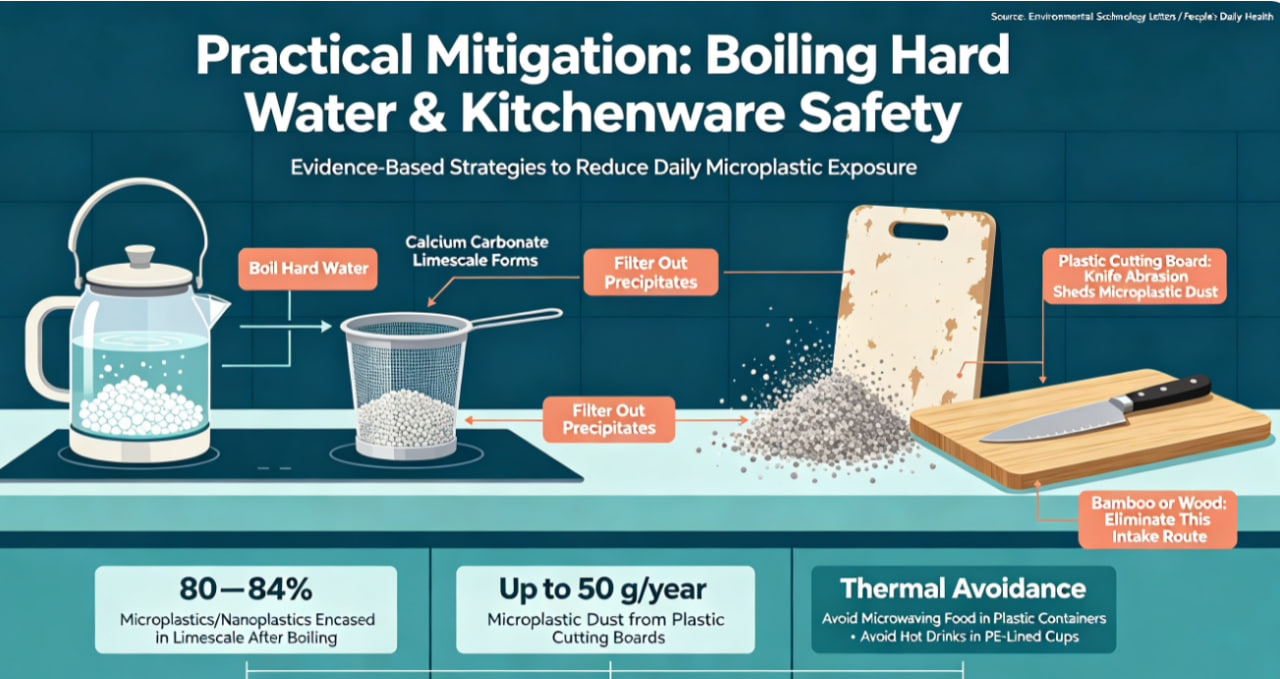
Practical Mitigation: Boiling Hard Water & Kitchenware Safety

Practical Mitigation: Boiling Hard Water & Kitchenware Safety

Source & Reference: Published in Environmental Science & Technology Letters / People's Daily Health Source URL: https://pubs.acs.org/doi/10.1021/acs.estlett.4c00081 In response to ingestion risks, Chinese public health authorities and researchers published evidence‑based lifestyle intervention guidelines to significantly reduce daily exposure. Actionable Prevention Strategies: Boil and Filter Method: Research from Guangzhou Medical University showed that boiling mineral‑rich hard tap water encases up to 80–84% of microplastics/nanoplastics inside calcium carbonate limescale precipitates, which can then be easily filtered out. Kitchenware Substitution: Plastic cutting boards shed up to 50 grams of microplastic dust annually due to knife abrasion; switching to bamboo or wood eliminates this intake route. Thermal Avoidance: Avoid microwaving foods in plastic containers or drinking hot beverages from polyethylene‑lined paper cups.

Blood-Brain Barrier Penetration & Dementia Correlation

Blood-Brain Barrier Penetration & Dementia Correlation

Source & Reference: Published via National Institutes of Health (NIH) / PMC Academic Repository Source URL: https://www.ncbi.nlm.nih.gov/pmc/articles/PMC11100893/ Comprehensive human autopsy studies assessing brain frontal cortex tissue revealed that nanoplastics accumulate in the central nervous system at significantly higher rates than in peripheral visceral organs. Key Neurological Findings: Surge Over Time: Human brain autopsy samples collected in 2024 exhibited 50% higher concentrations of plastic particles by weight compared to autopsy samples from 2016. Dementia Association: Tissues from deceased patients clinically diagnosed with Alzheimer's disease contained up to 10 times higher plastic densities by weight than neurotypical control brains. Neurological Threat: Ultra‑fine nanoplastics breach the blood‑brain barrier (BBB), accumulating inside neuronal mitochondria and triggering localized neuroinflammation.

Get the latest deals & new arrivals

Subscribe to our newsletter. No spam, unsubscribe anytime.